
Why Most Diets Fail: The Psychology Behind Eating, Cravings & Long-Term Health
We have been told for decades that weight loss is a simple math problem: calories in versus calories out. If that were true, the multi-billion dollar diet industry would have gone out of business years ago. The reality is that nearly 95% of people who lose weight on a restrictive plan gain it back within five years. To understand why most diets fail, we have to stop looking at our plates and start looking at our brains.

For the busy adult, dieting often feels like a second job—one that pays in deprivation and stress. If you’ve ever felt like you lacked “willpower” because you reached for a cookie after a long day, it’s time to forgive yourself. Your biology isn’t broken; your strategy is. By understanding the psychology behind eating, we can move away from temporary fixes and toward genuine, long-term health.
The Biological Trap: Why Most Diets Fail from the Start
When we dramatically slash our calorie intake, our bodies don’t see a “health goal”—they see a famine. From an evolutionary standpoint, your brain is programmed to keep you alive.
1. The Survival Mechanism
When you restrict food, your body increases the production of ghrelin (the hunger hormone) and decreases leptin (the fullness hormone). This is one of the primary reasons why most diets fail; you aren’t just fighting a craving, you are fighting a survival instinct that has been honed over millions of years.
2. The Metabolic Slowdown
The body is incredibly adaptive. If it thinks food is scarce, it slows down your basal metabolic rate to conserve energy. This makes subsequent weight loss harder and weight regain almost inevitable once you return to “normal” eating.
The Psychology of Restriction and the “Binge-Restrict” Cycle
The mental toll of dieting is often more damaging than the physical one. Most diets are built on the foundation of “no,” “don’t,” and “can’t.” This creates a psychological phenomenon known as cognitive dietary restraint.
The Forbidden Fruit Effect
As soon as we label a food as “off-limits,” our brain becomes hyper-focused on it. This leads to the “What the Heck” effect: you eat one small piece of chocolate, feel like you’ve “ruined” your diet, and decide to eat the whole box since the day is already lost. This cycle is a hallmark of why most diets fail—they create a binary of perfection or failure.
Moving Toward Food Neutrality
To achieve long-term health, we must stop moralizing food. An apple isn’t “good” and a slice of cake isn’t “evil.” They are simply different types of fuel and pleasure. When food loses its moral power over you, cravings lose their intensity.
Understanding Cravings: It’s Not About Willpower
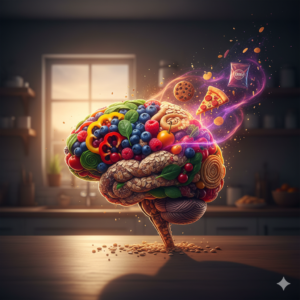
If you find yourself standing in front of the pantry at 9:00 PM, it’s rarely because you are physically hungry. Cravings are the language of the brain, often signaling an unmet emotional or physiological need.
-
Stress and Cortisol: High stress levels trigger cortisol, which makes you crave high-fat, high-sugar “comfort foods.”
-
Dopamine Seeking: Our brains use food to get a quick hit of dopamine. If your day was devoid of joy or accomplishment, your brain will look for it in a bag of chips.
-
Sleep Deprivation: For busy adults, a lack of sleep is a major reason why most diets fail. Sleep-deprived brains crave 30% more calories the next day, usually from refined carbs.
Why Most Diets Fail to Account for Long-Term Health
The industry sells “30-day challenges” and “6-week shreds.” But health isn’t a sprint; it’s the environment you live in. A diet that you can’t see yourself doing in five years is a diet that is destined to fail.
| Traditional Dieting | Psychological Health Approach |
| Focus on the scale | Focus on energy and mood |
| External rules (points, macros) | Internal cues (hunger, satiety) |
| Short-term deprivation | Long-term habit formation |
| Social isolation | Flexible social eating |
Building a Sustainable Relationship with Food
If we want to avoid the pitfalls of why most diets fail, we have to build a system that respects our psychology.

1. Intuitive Eating Principles
Intuitive eating isn’t about eating whatever you want, whenever you want. It’s about relearning how to trust your body’s signals. It involves:
-
Eating when you are hungry.
-
Stopping when you are comfortably full.
-
Finding satisfaction in the eating experience.
2. The 80/20 Rule
Sustainability lives in the middle ground. Aim to eat nutrient-dense, whole foods 80% of the time, and leave 20% for the “soul foods” you love. This prevents the feeling of deprivation that causes most diets to collapse.
Overcoming the Psychological Hurdles of Busy Adults
Busy adults often eat on the go, over a keyboard, or while driving. This “distracted eating” prevents the brain from registering that it has been fed, leading to overeating later.
The Power of Mindful Eating
Mindfulness is a key tool in explaining why most diets fail and how to fix them. By slowing down and actually tasting your food, you allow your brain’s satiety signals to catch up with your stomach. Even five minutes of quiet eating can transform your relationship with a meal.
Planning for the “Decision Fatigue”
By the end of a workday, your “willpower” is depleted. This is when the drive-thru looks most tempting. Instead of relying on willpower, rely on systems. Having a simple, pre-prepped meal waiting for you removes the need to make a difficult decision when you are tired.
The Role of Self-Compassion in Long-Term Health
The most overlooked reason why most diets fail is the presence of shame. Shame is a terrible motivator. It triggers the stress response, which leads to… you guessed it, more eating.
Self-compassion is the “secret weapon” of sustainable health. When you have a day where you don’t eat according to your plan, a self-compassionate response is: “I had a hard day, and I ate more than I planned. That’s okay. I’ll focus on a nourishing breakfast tomorrow.” This prevents the “shame spiral” that leads to giving up entirely.
Moving Beyond “Why Most Diets Fail” to a Better Way
To transition from a “dieter” to a “healthy person,” you have to change your identity. You aren’t someone “on a diet”; you are someone who nourishes their body so they can show up fully for their life.
-
Focus on Addition, Not Subtraction: Instead of saying “I can’t have soda,” say “I’m going to add more water today.”
-
Prioritize Protein and Fiber: These are the biological “off switches” for hunger.
-
Manage Your Stress: Sometimes the best “diet” move you can make is taking a nap or going for a walk to lower cortisol.
Conclusion: Breaking the Cycle for Good
Understanding why most diets fail is the first step toward true freedom. It allows you to step off the treadmill of constant restriction and regain your mental energy. Health isn’t found in a specific meal plan or a magic supplement; it’s found in the small, consistent, and compassionate choices we make every day.
You don’t need more willpower. You need a better system—one that accounts for your busy life, your complex brain, and your need for joy. Stop dieting, and start living.